

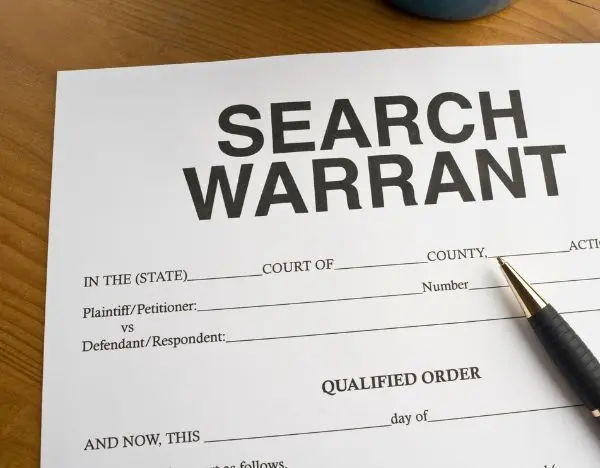
Every individual and their properties are always protected, even if they are subject to investigation. In the Philippines, a search warrant is an order in writing that commands an officer to search for personal property of an individual and bring it to court, as governed by Rule 126 Section 1 of the Revised Rules of Criminal Procedure. It is a judicial order to sequester properties to be used as evidence. Its purpose is to ensure that the necessary evidence is lawfully gathered and not tampered with, it also limits the state in exercising their powers that may result in abuse, and it evidently protects one’s privacy and dignity.
Legal Basis
The constitution, specifically Article III Section 2 states that everyone is entitled to their right against unreasonable searches and seizures, affirming that a warrant is a requirement when doing so. The aforementioned provision states the requirements or requisites that must be fulfilled for a valid search warrant, and also provides a prohibition against general warrants. Furthermore, Article III section 3 of the constitution also states that any evidence obtained without a valid warrant becomes inadmissible in court. Another legal basis is the Rule 126 of the Revised Rules of Criminal Procedure wherein it discusses the scope, sections, and procedures.
Requisites or Nature
Warrants should have a probable cause; wherein facts and circumstances that would lead one to believe that the offense was committed and the objects sought are to be seized as well. However, this is different from the probable cause for arrests. A search warrant must also be based on facts or gathered evidence for the meantime. It must also be tied to one specific offense only, and those that cover more than one crime are considered general warrants, void ones.
Probable cause must be determined personally by a competent judge, typically one with territorial jurisdiction over the crime or place to be searched. In rare cases and for compelling reasons, it may be filed with a different court within the same judicial region. The judge must examine the complainant and witnesses under oath with probing questions to ensure their testimony is based on personal knowledge and not mere hearsay. Only judges with territorial jurisdiction may conduct this examination, except again in compelling circumstances.
Another essential requisite of a search warrant, that must be duly taken note of, is that it needs to be particular or specific in its description. The place to be searched must be clearly described, those that are to be seized must be specifically identified. Its descriptions must be sufficient to prevent the officer from searching and seizing items that are not meant to be included. Without any specifications, it is also considered a general warrant. In specifying properties that are related to the offense, they fall under 3 categories:
- Subject of the offense
- Stolen or embezzled, or the proceeds/fruits of the offense
- Used or intended to be used as the means
Application and Execution
It is also important to take note of the application and execution of search warrants for the protection of an accused’s rights. With regards to the validity, it is only valid for ten days from its issuance. Under Rule 126 Section 9, a search warrant must also be served during daytime only, unless the affidavit states that the property to be searched allows for service at any time of the day or night. Furthermore, it is crucial that officers, upon showing up at the premises, present to the person involved the search warrant.
When executing a search, only duly authorized officers may do so, and they must wear body-worn cameras to document compliance and protect both law enforcement and suspects from abuse. Improper or unjustified use of such devices, however, can weaken the prosecution’s case and lead to suppression of evidence. Under Rule 126, Section 7—the “knock-and-announce” rule—officers must announce their purpose and authority before entry. They may forcibly enter only if admission is denied.
Similarly, Section 8 provides that there must be witnesses when the search and seizure warrant is imposed. It must be made in the presence of the lawful occupant or any family member; or in their absence, there should be at least two witnesses who are in the age of discernment residing in the same locality.
After seizing necessary items for evidence, there is a need for a detailed inventory. Collected items must immediately be issued a detailed receipt and inventory to the lawful occupant or witnesses. Whatever was seized, alongside a sworn inventory, must all be immediately delivered to the judge who issued the warrant.
Effects of Defective Warrants
There may be some search warrants that are invalid due to their irregularities and defects. These are simply just the opposite of the requisites of a warrant which are: lack of probable cause, insufficient examination, lack of particularity or description, expired warrant or those that are more than 10 days, and when it was issued not by an unauthorized jurisdiction or judge. Defective warrants also carry with them effects. Essentially, they are void ab initio – they become an invalid warrant, any possible evidence collected with a defective warrant shall be suppressed or be excluded as it is rendered inadmissible, the case may be dismissed if the only evidence of the prosecution is via the defective warrant.
Remedies
Remedies are also available in search and seizure warrants. One is the motion to quash, a judicial remedy sought by the aggrieved party. This is typically filed where the crime was committed. Its grounds are: lack of probable cause, absence of personal examination, lack of particularity, and issuance of more than one offense. Exclusionary rule is another remedy that can be sought. Evidence or any proof sequestered in violation of any rules essentially becomes inadmissible. These items are, therefore, cannot be used as evidence in court.
Exceptions to Warrant Requirement
While a warrant is ordinarily required, exceptions exist. Consent waives the right and allows a search without warrant. During a stop-and-frisk, officers may pat someone down if they reasonably suspect criminal activity. Upon lawful arrest, one may be searched for weapons or evidence. Under the plain view doctrine, officers can seize items in their view without a warrant. In exigent/emergency situations, warrantless searches are justified to prevent harm or destruction of evidence. The mobility of vehicles permits warrantless searches when probable cause exists. Finally, customs and immigration searches are also exempt from the warrant requirement.
In the case of Lopena vs People, Lopena flagged down at a checkpoint based on an unverified solitary tip from an informant. He was searched and arrested for illegal possession of dangerous drugs. The court acquitted Lopena of his charges, stating that the search and seizure conducted were illegal since it was from an unverified tip from an informant. The court also argued that consequently, the “evidence” collected are inadmissible under the Exclusionary Rule1.
- Evardo y Lopena v. People, G.R. No. 234317, May 10, 2021 ↩︎