

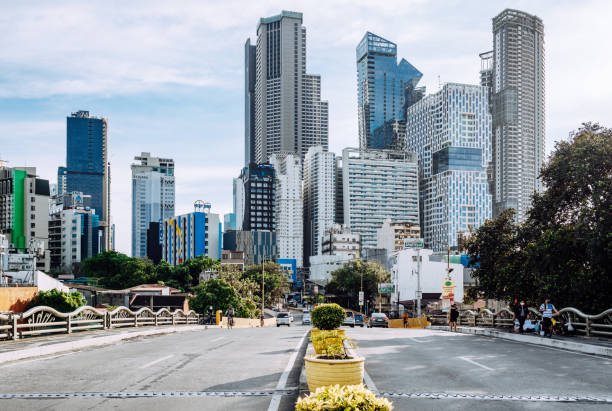
The National Building Code or Presidential Decree 1096 (PD 1096), is a legislation regulating the design, construction, occupancy, and maintenance of varied structures in the Philippines. As it overrides outdated building regulations, it meets modern technical and developmental needs. It provides a clear framework of minimum standards for all buildings, keeping the best interests in promoting public safety, health, and general welfare.
Legal Basis
PD 1096 is built upon the old national building code which was RA 6541 that was enacted in 1972. Moreover, some of its related laws are the Fire Code, Local Government Code, and Accessibility Law. All of which are laws that promote the public’s safety and welfare.
Scope and Application
The National Building Code of the Philippines governs all public and even private buildings and structures. This constitutes high-rise, residential, commercial ones, and even public buildings. The coverage of the decree starts from the planning of the structure, to its design, construction, alteration, repair, occupancy, and until its demolition if done so. While the legislation generally has control over all public and private structures, it has certain exceptions. Both indigenous family dwellings and socialized housing projects are not within the scope of the legislation. It also excludes small sheds, garden structures, and the like.
Key Provisions
Permits and Regulation
PD 1096 has notable differences from its precedent version of the building code, to meet modern needs. One of its key provisions is with regards to the building permits and regulation. It states that various permits are needed to be acquired, generally through the local government units, before starting construction. These permits and other documents may be lot ownership proof, contracts, tax declarations, real property tax receipts, and the like. Permits are also proportional to the occupancy, height, area, and construction cost of the project. The agency responsible for overseeing this is the Office of the Building Official, and they also impose penalties for those who disregard regulations and don’t follow through with proper permits.
Zoning and Land Use Compliance
Its zoning and land use compliance mainly focuses on strict administrative mandates rather than land use policies. The provision prevents the construction of buildings that may violate local government regulations. It ensures that buildings are adherent to local zoning ordinances, comprehensive land use plans, and utilize comprehensive land use plans.
Structure and Safety Standards
The structural and safety standards to be observed by developers to ensure that structures can withstand environmental and functional loads, and also provide protection to occupants against hazards. They must be adherent to the load-bearing requirements, foundation rules, and even take into account earthquake resistance. The decree stipulates that all buildings must conform to the principles of safe construction that they are suited or designed for. Its design must also be wind, fire, floss, and disaster-resilient. On top of fire-resistant design and materials, there should also be proper firewalls, fire exits, stairways, and the like. In relation to this, proper building sanitation, plumbing, especially ventilation requirements are needed as well.
Classification and Use of Building
It is also important to take note of the classification and use of buildings, especially on instances of imposing penalties and legal consequences. Building classifications are residential, commercial, industrial, institutional, and agricultural – all of which have different uses. Special occupancies must also be taken into account as well and these can be stadiums, assembly halls, and hospitals.
Legal Consequences
Violators may face legal consequences from civil to criminal, which may be based on the gravity of the violation. Most common consequences are administrative actions by the Local Building Official. Light administrative fines are imposed on violations of failure to post permit, construction fencing non-compliance, etc.
Less grave violations are unauthorized alternation, using or occupying a building without a certificate of occupancy, and the like. Grave violations include unauthorized change in occupancy, continuous operation despite closure, structural modifications without permits. Other administrative fines may be surcharges on permit fees, suspension or revocation of permits, issuance of work stoppage order. Abatement can also be imposed for dangerous buildings by ordering for repair, vacation, or even demolition. Violators can also be held liable through imprisonment up to 2 years if they have constructed, altered, repaired, demolished, and other similar acts that are against the code. If the violator is an alien, they may be subject to deportation.
In the case of Yu vs Heirs of Manuel Sia, the parties entered into a contract for the construction of a four-storey commercial building. Rosemarie Sia refused to pay her remaining balance despite a written demand from Engineer Yu, with the argument that the defects on the 3rd and 4th floor did not meet the standards of the National Building Code. The court ruled that Yu was administratively, criminally, and civilly liable for the damages and cost of rectifying the structure1.
Role of Authorities and Professionals
Various authorities and entities work for overseeing and the implementation of PD 1096. The National Building Code Development Office or the NBCDO is the primary agency for policy formulation. Building officials and other similar authorities are responsible for the implementation and enforcement at the Local Government Unit level, who likewise integrate zoning and land use in the structures. On a smaller scale, contractors, architect, engineers and similar professional are responsible in not only the erection of the property but also with them being compliant.
Rights and Obligations of Property Owners
The legislation also provides the rights and obligations of property owners in the pre- and post-construction of their buildings. Before starting, they must secure the necessary permits and comply with the safety standards. Without these, their plans cannot proceed. And during the course of their business or for as long as their structure is standing, it is their duty to maintain it in safe conditions. In the case that their property comes into demolition or the like, it is in their right to undergo due process.
- Engr. Ruben Y. Yu, vs. Heirs Of Manuel Sia, G.R. No. 248495, July 06, 2022 ↩︎