

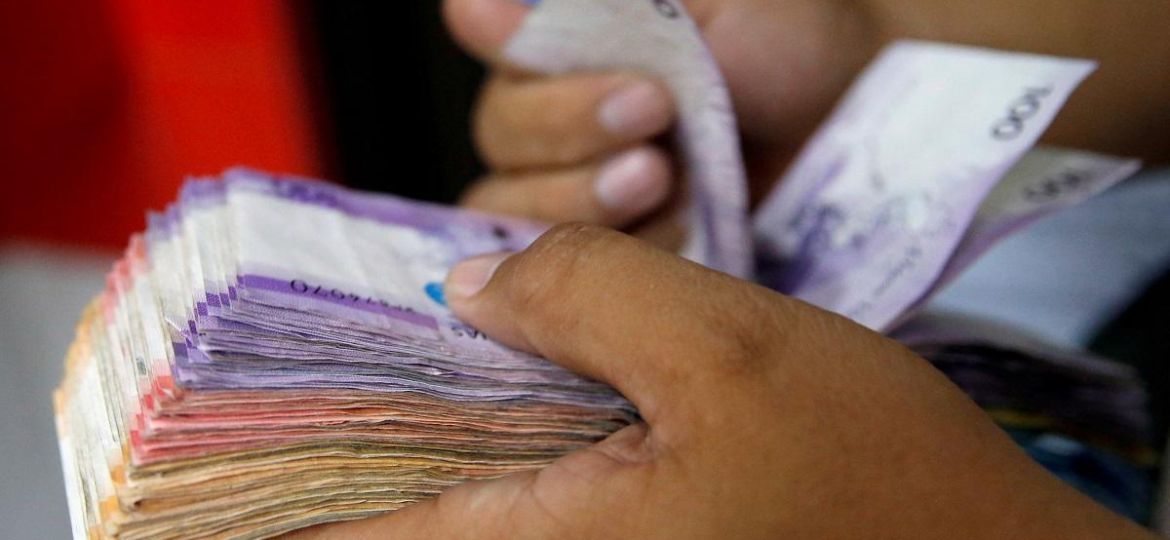
In every transaction, there is a needed medium of exchange which is called the legal tender. This is recognized by law which is valid in settling public or private debts or matters. Generally, a creditor cannot refuse this as payment as they are obliged to accept it; especially when in the same denomination. Legal tender ensures the stability and uniformity of the country’s currency, and also simplifies commercial transactions resulting in clear financial obligation standards. Banko Sentral ng Pilipinas is the main institution responsible for overseeing the design, production, issuance of all coins and bank notes.
Legal Basis
The role of the Banko Sentral ng Pilipinas on legal tender are stipulated in the 1987 Constitution, wherein there must be an independent monetary authority governing the policy direction in money, banking, credit, and overseeing financial matters and institutions1. Its basis on the civil code presents under Article 1249 that payments of debt should be in legal tender. In relation to this, the revised penal code also provides the sanctions in refusal in doing so.
What Constitutes Legal Tender
Both bank notes and coins issued by the BSP are considered legal tender. Bank notes are more commonly known as bills. These include both the New Generation Currency and the older New Design Series. These usually have the prominent Filipino figures and the country’s natural wonders or species as design. These also come with security features of watermarks, security fibers, tactile marks, and the like. Likewise, coins are also considered legal tender. However, unlike notes, these come with specific limitations on the amount per transaction as to prevent inconvenience. Bank notes do not come with limitations, but coins do. For centavos, they are considered legal tender up to ₱100 only. And for ₱1, ₱5, ₱10, ₱20 coins, these are legal tender up to ₱1,000 only. Generally, all legal tender are unlimited and must be accepted for payments – unless otherwise met with certain conditions or limitations. This includes currencies not being damaged or mutilated.
Obligations and Payments
As provided in Article 1249 of the Civil Code, payments should be made in Philippine legal tender only. However, it also provides that some non-legal tender can be accepted as long as it is agreed upon2.
Similarly, Philippine laws also provide legal consequences for refusal to accept legal tender. Furthermore, if a creditor refuses to accept such, it can extinguish one’s debt. Furthermore, they can also face sanctions from the Banko Sentral as refusal of payment undermines the monetary system stability.
In the case of Camp John Hay Dev vs BCDA, the former was asked to vacate the leased property clarifying that its obligation to vacate was contingent only on BCDA’s full payment of the arbitral award. The court affirmed that the satisfaction of monetary awards must be made in valid payments – in legal tender3.
Non-Legal Tender
In the recent years, there have been different media of exchange in transactions. However, these are not considered legal tender, and can only be accounted for under certain conditions. Checks, credit cards, mobile payments, and the like are not considered legal tender; therefore, can be refused as payment methods. Payments through the aforementioned media are only valid when funds are received and cleared. With regards to foreign currency, they are not considered legal tender, making them unusable. However, they are widely accepted in certain sectors like tourism. On another note, they can only be accepted for transactions as long as it is agreed upon by both parties. Additionally, negotiable instruments such as checks, promissory notes, and the like are also not legal tender until converted to cash.
- Constitution of the Republic of the Philippines. (1987). Art. XII, § 20. Official Gazette.
Retrieved from https://www.officialgazette.gov.ph/constitutions/1987-constitution ↩︎ - Civil Code of the Philippines, Art. 1249. (1949). Republic Act No. 386. Official Gazette.
Retrieved from https://lawphil.net/statutes/repacts/ra1949/ra_386_1949.html ↩︎ - Camp John Hay Dev. Corp. v. Bases Conversion and Development Authority, G.R. No. 219421, Supreme Court of the Philippines, April 3, 2024 ↩︎