

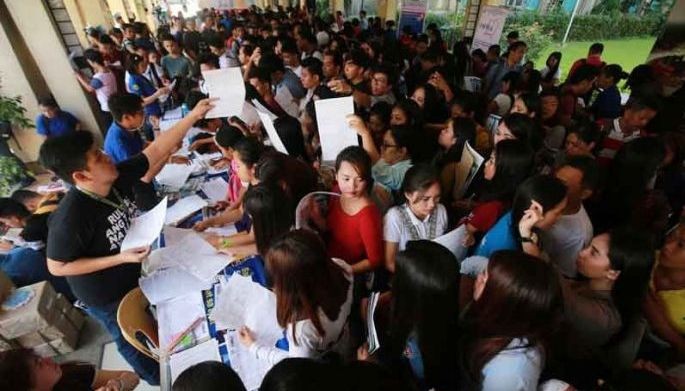
Job security is one of the needs of every individual. Through a stable and secure job, one can be able to provide for themselves and secure their other needs. In today’s society, there is already a wide variety of jobs. However, the job market remains a tough competition. Underemployment and unemployment are some of the issues that one may come across in work related matters. It may not only affect themselves, but also the institution they are working for, their families, and even their productivity.
Definition and Concepts
Unemployment and underemployment are two distinct concepts. Unemployment is the term used when one is currently not working, but is actively seeking for one. Individuals who are unemployed are typically available for work right away, and are willing to take up employment if it’s offered to them.
Underemployment, on the other hand, is a concept that has a broader range. Underemployed individuals may be those who are also currently seeking work, but are currently employed. These workers may be desiring more working hours or maybe because they are seeking for a job that better utilizes their skills.
It is also important to take note of the concept of the labor force when tackling underemployment and unemployment. Both unemployed and underemployed individuals are considered part of the labor force. This refers to the working-age population that typically range from 15 years old and above – those who are willing, able, and available to take on work. On the contrary, those who are younger than 15, and those who are older than 15 but are not employed and not actively seeking work. These are individuals who are students, housewives, retirees, people with disabilities who cannot work, and discouraged workers who stopped applying due to job unavailability. Overall, the labor force is a key indicator of a country’s economic activity.
Underemployment Deep-Dive
Underemployment looks at employed individuals who seek additional work. This may be due to their desire to have additional working hours because some workers do not fully utilize their skills, they are overqualified, or work fewer hours than normal. Normally, the main issue of underemployment is the education and skills mismatch. Statistically, there are a lot of licensed professionals in various fields. Its downside is that the number of jobs available are not able to meet the professional demand. As a result, individuals settle with jobs that are not aligned with their skills, with their college degrees, and something they are not well-adept with.
Legal and Policy Frameworks
While there are no legal and policy frameworks directly on unemployment and underemployment, a number of Philippine laws and mandates provide protection for job security and conducive work environment. Article II Section 18 of the Constitution provides that the state is responsible in protecting the rights of the workers and promoting their welfare. Similarly, Article XIII, Sections 3-4 provides full protection for both local and overseas workers, and also mandates the state to promote equality in employment opportunities1.
In the case of Aragones vs Altech Biotechnology Corporation, the company withdrew their offer to Aragones before his start date, but after he had signed the employment contract already. Aragones held that he was illegally dismissed, arguing that there has already been an established employer-employee relationship from the moment he signed the contract – making him employed under Alltech already. The court ruled in favor of Aragones, stating that the employment contract was perfected upon Aragones’ acceptance and signing of the offer. The court also ruled that the company’s attempt of withdrawing the offer was invalid2.
Causes and Challenges
Underemployment and unemployment are tied with several causes and challenges that are difficult to escape from – especially with the country’s job market on the rocks. One cause of this would be the insufficient job creation or availability. As the number of workers increase rapidly, the number of jobs available fail to keep up with the demand. In relation to this is the challenge of skill mismatch. Due to the unbalanced number of workers and jobs available, some individuals settle with jobs that are not aligned with their skills. In today’s educational system, there are also a high volume of graduates whose skills, intellect, and capabilities are not inline with the demands of modern and high-value industries.
Another cause or challenge would be due to labor market segmentation. The formal and good jobs are what every jobseeker wants due to high pay, benefits, and job security. However, it is also difficult to be employed in such jobs. Whereas for the informal and bad jobs, despite these may somehow be readily available to workers, a lot would usually turn these down due to its nature of being temporary (contractual), low-pay, and unprotected (no benefits and security). Especially in the rural settings, a lot of workers are absorbed into informal work or self-employment due to lack of jobs available.
Impacts
Being employed is something necessary for one to secure their needs. Moreover, being able to work in an environment that is conducive and utilizes your skills is something important as well. Being unemployed is detrimental to one’s quality of life and self-esteem. They experience financial stress due to no income, low self-esteem, depression, and other social and psychological problems that may have been brought about by peer pressure. In relation, another impact of this is social unrest and dissatisfaction
The stress of being unemployed or being mismatched in a job can worsen one’s physical health. The emotional and mental turmoil of being unemployed may manifest in one’s physical aspects – increased susceptibility in acquiring diseases due to weak systems and also due to developed unhealthy behavior.
- 1987 Philippine Constitution. (1987). Article XIII, Sections 3–4. Official Gazette of the Republic of the Philippines. Retrieved from https://www.officialgazette.gov.ph ↩︎
- Aragones v. Alltech Biotechnology Corporation, G.R. No. 251736, April 2, 2025, Supreme Court of the Philippines. Retrieved from https://lawphil.net ↩︎